Posts

The Pots and Pans revolution of 2009
Image
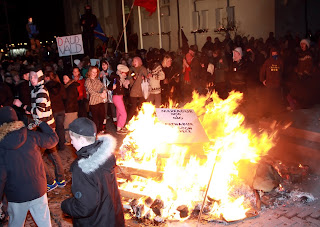
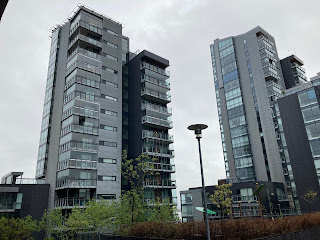
  The crash, when it came, was dramatic. The global financial crisis of 2008 didn’t start in Iceland. Bankers in the US found clever ways of lending too much money to mortgage borrowers who couldn’t repay it, and passing these risks on to other banks throughout the world. No one could quite work out how many of these bad mortgages there were, and who ultimately held the risk. The banks didn’t trust each other. When Lehman Brothers, an American investment bank, could no longer borrow to fund its activities, it went bust. Now nobody trusted any bank. For a few days in October 2008 it looked as if the ATMs in Britain and America would stop working. And in Iceland. The Icelandic banks were reliant on the goodwill of foreigners, and this was no longer forthcoming. They didn’t have the funds to repay international depositors who were becoming nervous. Every Icelander knows where they were on the afternoon of 6 October 2008 when Prime Minister Geir H. Haarde addressed the nation . Clearly...
Bust: Viking pillagers in the 21st century

Image
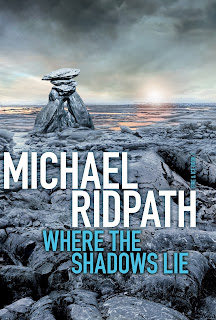
  While I had been writing Where the Shadows Lie , happily losing myself in thoughts of sagas, rings, volcanoes and Gull beer, the financial world was melting down around me. I remembered how I had explained to the German author ten years before that it would never be possible to write a financial thriller set in Iceland, and now the country was smack in the middle of the biggest financial crisis the world has yet seen. Friends urged me to write another financial thriller. I was reluctant. But I couldn’t ignore it. Especially since I had resolved to write about issues that went beyond Iceland. As a foreigner, I wanted to write about Iceland’s interaction with the outside world, about big issues, not small ones, and there was no bigger issue as far as Iceland was concerned than the financial crash. It was a subject that I knew well, and the intersection of greed, hubris, ambition and self-delusion in the people who caused it was exactly the kind of thing I had examined in my finan...

Favourite Places – Selatangar

Image
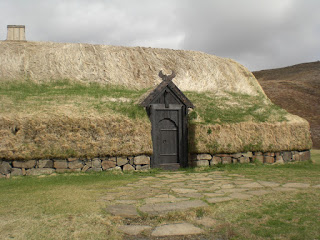
  There are two ways to get to the Blue Lagoon from Reykjavík – the Blue Lagoon is the large geothermal pool-spa next to a power station, and is well worth visiting, although it is expensive. One way is to take the main highway to the airport and turn left on a well-paved road following the tourist buses. The other way is by the back roads, turning off the main road just past Hafnarfjördur and following signs to Krýsuvík. The small road passes Seltún , a geothermal area of vents, mud pots, hot springs and sulphurous ponds that simmer and burp amid hillsides of red, yellow and orange, and water of an other-worldly green-blue. Just south of these is the ‘draining lake’, Kleifarvatn , which sprang a leak in its floor in 2000, revealing a hundred metres of black volcanic sand and rock around the shore (Arnaldur Indridason wrote a great novel set here). All around here, you are very aware that something in the ground beneath you is unsettled. The place is spooky, especially when the mi...

Publish and be Damned: Magnus I Becomes Where The Shadows Lie

Image
  Writing a novel is all very well, but at some point it has to be let out into the world to take its chances. My agent Carole Blake and I had agreed that her assistant Oli would act for me on this one.   I would be one of his first clients. But he had to like the book.   He read it. He liked it. Together, we came up with a plan. Oli sent the manuscript out. I was nervous. Extremely nervous. Submitting the manuscript It takes a while for publishers to respond to submissions, even when supplied by an agent, but I received a couple of quick rejections of the ‘not one for us’ variety. That’s better than the ‘this book is a load of old crap’ variety. I tried not to panic. I told myself that if a publisher was going to say yes, they would take their time to get back: the manuscript would have to be shown round to colleagues; sales and marketing would need to be convinced. But, frankly, the waiting was difficult. What the hell would  I do if they all said ‘no’? There was ...

Writing Magnus I: Tap Tap Tap

Image
  Writing Magnus I was a lot of fun. I liked Magnus, and it was good to know that we were just getting acquainted; in my previous novels, my heroes, as I naively persist in calling them – protagonist is just too analytical even for me – had come and gone. I hoped Magnus and I would be together for a while. And it was fun to write about Iceland. When the writing is going really well, I feel that I am actually there, on the streets of Reykjavík or the slopes of Mount Hekla. Research File I had my photographs of Iceland to refer to, and my notes. Lots of notes. I had spent a week cutting and pasting notes from all my reading and my trip into a Word document, sorted under headings like ‘Bars’, ‘Thingvellir’, ‘Police procedure’, ‘The Tjörnin’. In the ten years and four novels since Magnus I, this document has become massive, over four hundred pages. But it definitely helps when writing a novel. Or even a blog. The Quarterly Review When writing my eighth financial thriller, I came up w...

Time to Write: Magnus I

Image
  Back to London, and time to write the book.  I was looking forward to it, but I was also scared. I’m always nervous when starting a new book. Nobody wants to write a dud, but my first Magnus novel was really important. After the slow demise of the financial thrillers and the failure of the spy novel, this was Plan C. There was as yet no Plan D, and I didn’t fancy drawing one up. Plan C had to work. For encouragement and perhaps a few tips, I read the novels of two British crime writers who had successfully set detective series in foreign countries: Craig Russell and his Fabel series in Hamburg, and David Hewson and his Nic Costa novels in Rome. They were convincing, well plotted with believable characters and, most importantly, authentic settings. They were extremely well written. On the one hand that was encouraging. On the other hand, could I write that well? Welcome to author paranoia. We all have it. It may even be a prerequisite for success; at least that’s what I tel...

The Hunt for a Lost Saga

Image
I was on the hunt for a plausible lost saga. How did it get lost? Whom was it about? Originally, the sagas were written down by monks on vellum (calfskin). They used quills from the left wings of ravens or swans better for right-handed scribes and ink made from willow or bearberry. There were hundreds, possibly thousands of copies of the sagas scattered throughout Iceland. Árni Magnússon By the eighteenth century, an Icelandic scholar who lived in Denmark named Árni Magnússon became worried that the stories might become lost, and travelled around Iceland for ten years collecting them. Iceland was poor, and he found scraps of vellum containing sagas repurposed for all kinds of everyday uses, such as shoe insoles or the back of a waistcoat.  He gathered his collection together in fifty-five boxes, and took them all back to Copenhagen in 1720. He became the librarian at the Royal Library, and stored the sagas there. In 1728, a fire swept through Copenhagen , destroying the library....